


There is a particular kind of courage that never makes the history books the way it should. It is not the courage of the charge, the ambush, or the foxhole.
It is quieter than that and perhaps more relentless. It is the courage of the person who walks toward the wounded when everyone else is running away.
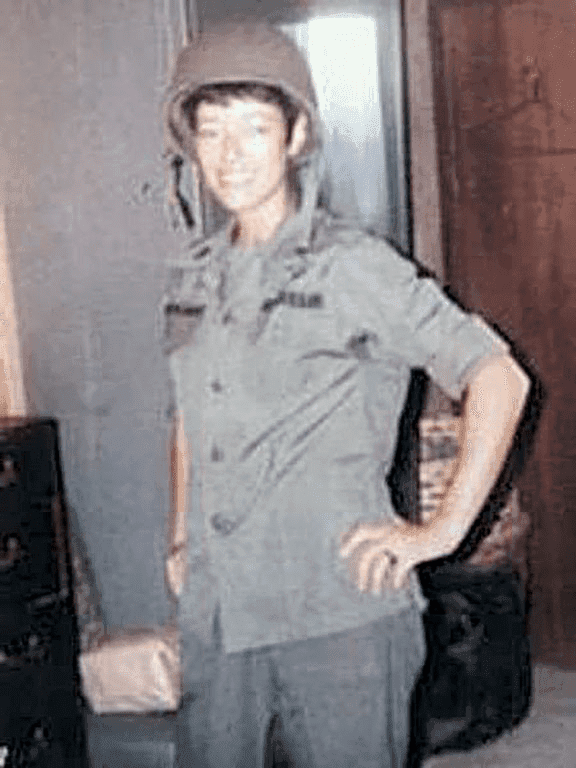
Captain Eleanor Grace Alexander had that kind of courage.
She carried it from a small town in New Jersey all the way to the mountains of Vietnam, and she gave every last measure of it in service to men she had never met before they arrived broken at her ward.
She was twenty-seven years old when she died. The mountains of Binh Dinh Province did not pause. The war pressed forward without ceremony. But the soldiers she had nursed back from the edge and the country she served owed her more than silence.
A Girl from Riverdale
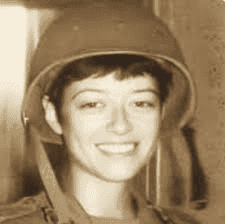
Eleanor Grace Alexander was born on September 18, 1940, in Riverdale, New Jersey a quiet town in Passaic County where people still knew their neighbors by name.
She grew up in the post-war years, in that particular American optimism of the late 1940s and 1950s, when the country believed it could fix whatever it set its mind to.
Nursing made sense for a woman like Eleanor. In mid-century America, it was one of the few fields where a woman’s intelligence was not a problem to be managed but a tool the world desperately needed.
Nursing required precision, endurance, and an almost stubborn refusal to be defeated by what you were looking at. Eleanor had all of that. She chose the profession and she chose it completely.
By the early 1960s, she had earned her commission as an officer in the United States Army Nurse Corps, holding the rank of Captain.
She was a healer by vocation and a soldier by commitment. When her country called her to Vietnam, she answered without hesitation.
The War That Swallowed 1967
By the time Eleanor arrived in Vietnam, the war had shed whatever restraint it once pretended to have. More than 485,000 American military personnel were in-country by 1967. Casualty rates that year were among the highest of the entire conflict.
The battles of Dak To, the grinding violence of the Central Highlands, and the endless ambushes across the coastal provinces were consuming men at a pace that overwhelmed every calculation made back in Washington.
For the nurses and medics deployed to the evacuation hospitals scattered across South Vietnam, the war was never abstract. It was the soldier on the stretcher who had stopped screaming, which was worse than if he hadn’t.
It was the quiet arithmetic of triage who could wait, who could not made dozens of times a day without the luxury of hesitation.
Eleanor was assigned to the 85th Evacuation Hospital, one of the mobile medical units that served as the critical link between the battlefield and survival. These hospitals moved with the war. They operated under canvas in provinces that were sometimes contested, sometimes under mortar fire, always understaffed and overloaded.
The nurses who worked them were not background figures. They were skilled professionals performing, under conditions that would have broken a civilian ward, what could only be described as daily miracles.
Eleanor worked those wards. She knew the sound of incoming helicopters before she could see them. She knew how to function on three hours of sleep and how to keep her hands steady when steadiness was the only thing standing between a patient and the end. She was, by every measure, exactly where she had trained to be.
The Last Flight
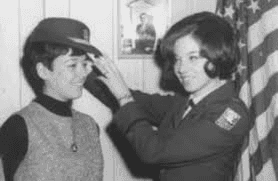
In late November 1967, Captain Alexander was completing a temporary duty assignment away from her unit. On November 30, she boarded a C-7A Caribou transport aircraft to return to the 85th Evacuation Hospital. She was going back to work. That is perhaps the most important thing to know about the day she died.
The C-7A Caribou was a reliable workhorse of the Vietnam air war a twin-engine transport built for short, difficult airstrips in forward locations that larger aircraft could never reach.
It was not glamorous. It was essential. It moved people and supplies across a landscape where roads were often more dangerous than the sky.
The weather over Binh Dinh Province that day was punishing. The monsoon season had turned the mountain ridgelines into walls of cloud and mist. Visibility was nearly nothing.
The terrain dramatic, unforgiving peaks rising sharply from the coastal plains offered no margin for error. Somewhere in that gray, the aircraft lost its orientation. The plane struck a mountain. The impact was immediate and total. There were no survivors.
Eleanor was killed instantly, along with every other person on board. Her death was classified as non-hostile — the military’s term for deaths that occur in the line of duty but are not the direct result of enemy action. Non-hostile. As though the word changes the weight of anything. As though the mountains cared about the taxonomy of loss.
She was twenty-seven years old.
The Silence That Followed
When word of a death reaches a unit in a war zone, it does not arrive the way grief arrives in civilian life with time and ritual and the cushion of distance. It arrives in the middle of a shift. Between one patient and the next. A name, spoken quietly.
A pause that no one has time to hold. And then the ward continues, because the ward must continue.
The men and women who served alongside Eleanor would have absorbed the news that way — fractured, incomplete, postponed. That is one of the war’s lesser-known wounds: grief deferred so many times it arrives years later, without warning, in the middle of an ordinary day.
Back in Riverdale, New Jersey, a family received a notification. The contours of that grief belong to them alone. But the shape of it is ancient and universal: a daughter who had gone into the world to do something good, and who would not be coming home.
What She Left Behind
We cannot know how many soldiers passed through the wards Eleanor worked. We cannot count the men who went home because her hands were skilled and her attention never wavered.
They are invisible in the record unnamed, alive, scattered across America. Some of them have grandchildren now. Some of them, on quiet nights, still feel the memory of a nurse’s hands on a wound they never speak about. Some of them were helped by Eleanor. They may not even know her name.
That is the legacy of every military nurse who has ever served: irreplaceable, mostly unrecorded, essential. They did not fight the war, and yet without them, far more of it would have been lost.
Eleanor Grace Alexander’s name is carved on Panel 31E, Line 6 of the Vietnam Veterans Memorial Wall in Washington, D.C. She is one of eight women among more than 58,000 names on that wall. The black granite reflects your own face back at you as you read. It is the memorial’s quiet insistence: look, and do not look away.
She was a war hero not because she charged a hill, but because she stayed at the bedside when staying was the hardest thing. She was a fallen soldier not because she fell in battle, but because she fell in service which is the same thing, in the end.
Eleanor Grace Alexander was born in Riverdale, New Jersey, on an autumn morning in 1940. She grew up believing that a person could make a difference with their hands and their presence and their refusal to give up on the man in front of them.
She carried that belief to the other side of the world and gave it, without reservation, to soldiers who needed her. She was on her way back to them when she died.
She kept her promise to the last.
In memory of Captain Eleanor Grace Alexander — United States Army Nurse Corps — September 18, 1940 to November 30, 1967 — 85th Evacuation Hospital, Vietnam.