

There are deaths in war that the history books do not know how to categorize. No explosion, no ambush, no enemy fire. Just a body pushed past its limit in a foreign climate, in a foreign country, doing work that asked everything of it and finally took everything in return.
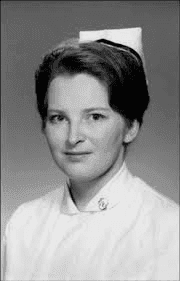
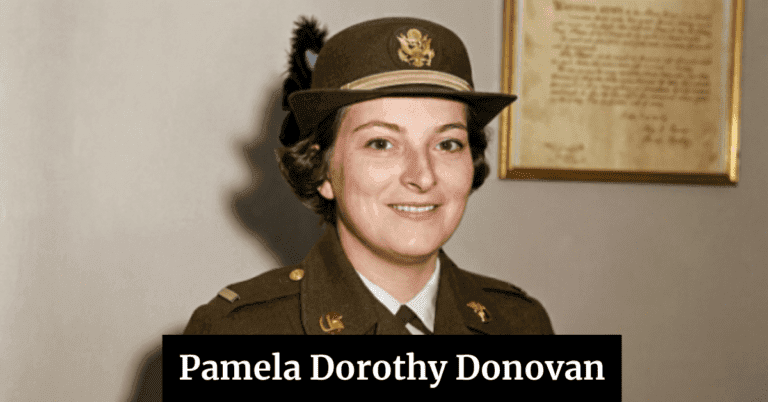
Second Lieutenant Pamela Dorothy Donovan did not die on a battlefield. She died in a hospital bed, in the same province where she had spent months caring for others, defeated by something too small to see and too aggressive to stop. She was twenty-six years old. She had crossed an ocean to heal people, and when the illness came for her, her colleagues the same nurses and doctors she had worked beside — could not save her.
That is not a lesser sacrifice. It is, in many ways, a lonelier one.
A Long Way from Ireland
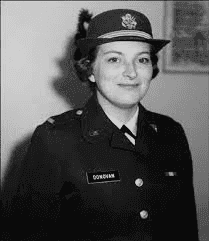
Pamela Dorothy Donovan was born on March 25, 1942, in Wirral, Ireland a place of green fields, coastal wind, and the particular quiet of a life lived far from the centers of power. We do not know the full arc of her early years, but we know the destination they led her to: a nursing commission in the United States Army, a rank of Second Lieutenant, and an assignment to one of the most demanding medical postings in the world.
She was Irish-born and Army-trained, which says something about the kind of woman she was. She had not grown up in the country she would serve. She had chosen it, chosen its uniform, chosen its mission. That kind of commitment — deliberate, clear-eyed, made from a distance — carries a particular weight. Pamela Donovan knew what she was signing up for. She went anyway.
By the time she arrived in Vietnam, she was assigned to the 85th Evacuation Hospital in Gia Dinh Province. She was a nurse, a healer, a young woman a long way from the Irish coast — and she threw herself into the work with everything she had.
The Hospital at the Edge of Everything
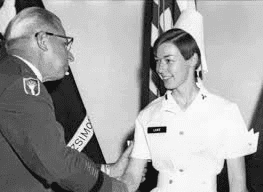
The 85th Evacuation Hospital was not a place for the faint-hearted. It operated in the grinding middle distance between the battlefield and recovery — receiving soldiers who had just survived something terrible and working to ensure they survived what came next. The staff worked long hours in difficult conditions, with the constant low-grade pressure of a war that never fully paused, even at night.
By 1968, the war had reached a new level of intensity. The Tet Offensive, launched in January of that year, had shattered whatever comfortable assumptions still remained about how the conflict was progressing. Fighting had reached the streets of Saigon, which sat in Gia Dinh Province — the very ground where Pamela worked. The psychological weight on every service member that year was immense.
But the dangers of Vietnam were never only military. The country’s climate, its insects, its water, its dense jungle ecosystem carried biological threats that the American military had not fully prepared for. Tropical diseases — some familiar, some not — moved through the ranks quietly and without warning. Medical personnel, who worked in close contact with the sick and the wounded every single day, were particularly exposed.
Pamela Donovan understood that risk. Every nurse in that hospital understood it. They worked anyway, because the alternative was to abandon the men who needed them.
The Illness That Could Not Be Stopped
Sometime in the summer of 1968, Pamela contracted a rare and aggressive strain of a Southeast Asian virus. The details of exactly how or when are lost to the incomplete record-keeping of a war that generated more chaos than paperwork. What is known is that the virus was fast and it was merciless.
Her condition deteriorated rapidly. What may have begun as fever and fatigue — the kind of symptoms that every person in that environment learned to push through — became something far more serious. The virus attacked her lungs. Severe pneumonia set in. Her body, already worn from months of demanding work in a brutal climate, could not hold.
The cruelest part of it was where she was. She was surrounded by the best medical care her unit could offer. The colleagues who had worked beside her, who had eaten meals with her and shared the exhaustion of long shifts, now stood on the other side of the bed and tried everything they knew. Medicine, in the end, has limits. The virus did not.
Pamela Dorothy Donovan passed away on July 8, 1968, in Gia Dinh Province, South Vietnam. Her death was classified as non-hostile — illness in the line of duty. She was twenty-six years old.
The Grief of the Living
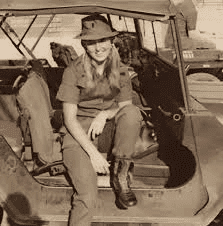
There is a specific anguish in losing a healer. The people who had served alongside Pamela had not signed up to be patients. They had signed up to be the ones standing upright, doing the work, keeping others alive. To watch one of their own succumb to something they could not cut out or suture or medicate into submission — that particular helplessness does not leave a person quickly.
In the days after her death, the ward continued. It had to. The helicopters still came. The stretchers still arrived. The work did not pause for grief, because the work never paused for anything.
Back in Ireland, a family waited for news that had already arrived in the worst possible form. A daughter born in Wirral, raised in the green quiet of the Irish countryside, who had gone to the other side of the world in a United States Army uniform to care for the wounded and who had not come home. The distance between Wirral and Gia Dinh Province is not only geographic. It is the distance between the life a family imagines for their child and the life that history takes instead.
What the Virus Could Not Take
Pamela Donovan’s name is engraved on the Vietnam Veterans Memorial Wall in Washington, D.C. She is one of eight women among more than 58,000 names on that black granite surface — each name a life, each life a story that deserved more than a single line of carved letters.
Her death was a stark reminder, as the official record puts it, of the non-combat health risks faced by medical personnel in the region. That language is accurate and insufficient at the same time. It describes what happened without touching what it meant — that a young woman from Ireland, who had given her skills and her years to a country not her own, in a war not of her making, died because the environment itself was lethal and no amount of dedication could change that.
She could not save herself. But the men she had cared for in the months before her death were alive because of her. That accounting does not appear in any official document. It lives, instead, in the quietly ordinary lives of veterans who made it home, who raised families, who grew old — and who might not have, without nurses like Pamela standing between them and the worst of what the war could do.
That is her legacy: invisible, immeasurable, real.
Pamela Dorothy Donovan was born in Wirral, Ireland, on a March morning in 1942. She grew up to believe that caring for others was worth crossing any distance. She crossed one of the largest distances imaginable in miles, in culture, in risk and she did it in service to strangers who needed her more than they would ever fully know.
The virus that killed her had no politics, no ideology, no awareness of what it was taking. It simply did what it did, in a province far from home, on a July day in 1968.
But Pamela knew who she was and why she was there, right up to the end. She had chosen this. She had shown up every day and done the work. She had held the line in the particular way that nurses hold it — not with weapons, but with presence, with skill, with the refusal to look away from suffering.
She kept faith with that calling until it cost her everything.
In memory of Second Lieutenant Pamela Dorothy Donovan — United States Army Nurse Corps — March 25, 1942 to July 8, 1968 — 85th Evacuation Hospital, Vietnam.