
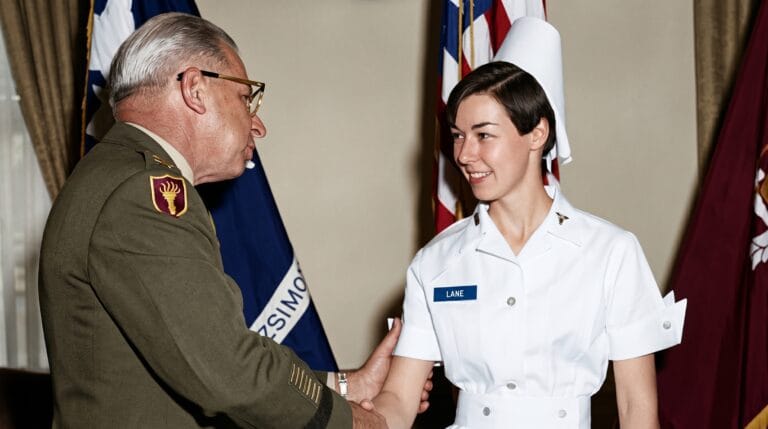

Carol Ann Elizabeth Drazba was twenty-two years old when she volunteered for the Army Nurse Corps. The Vietnam War was still in its early, quieter phase before Tet, before the protests filled every major American city, before the full weight of what the country had walked into became impossible to deny.
In 1965, Vietnam was a place most Americans could still locate only vaguely on a map. Carol located it precisely, raised her hand, and said she would go.
That decision would define everything that followed. It would take her from a working-class town in northeastern Pennsylvania to the outskirts of Saigon, to a February morning in 1966 when a helicopter clipped a set of power lines and the sky came down.
She was twenty-three years old. She became one of the first American women to die in the Vietnam War not because the war found her, but because she had gone looking for the place where she was needed most.
Dunmore, Pennsylvania
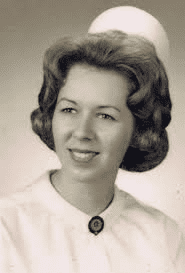
Carol was born on February 11, 1943, in Dunmore, Pennsylvania a small borough tucked against the city of Scranton in the hard-working northeastern corner of the state.
Dunmore was coal country, railroad country, the kind of place that produced people who understood labor and duty without needing either explained to them.
Its streets were lined with Catholic churches and modest homes, and the families who lived there tended to believe, without much fanfare, that you showed up and you did what needed doing.
Carol grew up in that tradition. She was the kind of young woman the community quietly produced in every generation capable, serious about her work, drawn toward service in the most literal sense of the word.
Nursing was not an accident for her. It was a calling that made sense from the inside out, a profession that matched the person she already was.
She earned her nursing degree, received her commission as a Second Lieutenant in the United States Army Nurse Corps, and then did the thing that distinguished her from many of her peers: she volunteered for Vietnam. Not because she was ordered to.
Not because she had run out of other options. Because she believed that was where the need was greatest, and she had trained her whole young life to meet exactly that kind of need.
The War in Its Early Hours
February 1966 was still the early chapter of American involvement in Vietnam, though the pages were turning faster than anyone had expected. The major combat escalation had begun in earnest in 1965, when the first Marine battalions landed at Da Nang and the air campaigns intensified.
By early 1966, approximately 200,000 American military personnel were in-country a number that would more than double within two years.
The medical infrastructure was still finding its shape. Evacuation hospitals, field hospitals, and surgical units were being established across the country, each one trying to build order in the middle of an environment that resisted it.
The 3rd Field Hospital, to which Carol was assigned, operated near Saigon one of the primary medical centers for a city that was simultaneously the seat of the South Vietnamese government and a place living in the permanent shadow of war.
For a young nurse just arrived in-country, the 3rd Field Hospital would have been an immersion in everything nursing school could never fully prepare you for. The volume of casualties, the severity of wounds, the heat, the noise, the compressed urgency of every single shift it demanded everything and then asked for more. Carol had been there only weeks when the morning of February 18 arrived.
The Morning of February 18
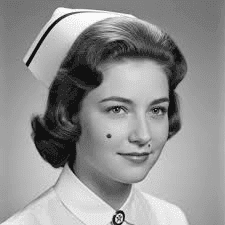
The UH-1B Huey helicopter was the signature aircraft of the Vietnam War present in every photograph, every memory, every piece of film from that era.
Its distinctive rotor sound became so associated with the conflict that veterans decades later would describe hearing it and feeling the war come back to them in an instant. It was the vehicle that moved everything and everyone across a landscape where roads were unreliable and danger was everywhere.
On February 18, 1966, Carol boarded a Huey for an operational flight near Saigon. The details of the mission’s purpose are not fully recorded. What is recorded is what happened next.
The helicopter struck high-tension power lines. In the low altitudes at which Hueys operated skimming above the landscape, navigating between structures and terrain power lines were an ever-present hazard, often invisible against the sky until it was too late. The aircraft went down immediately. It caught fire on impact. All seven people on board were killed.
Carol Ann Elizabeth Drazba was among them. She had been in Vietnam for weeks. She was twenty-three years old, just seven days past her birthday.
The crash was ruled a non-hostile aviation accident. Seven lives, ended in seconds, on a flight that was simply part of the routine machinery of keeping a war running.
There was no enemy involved. There was no last stand. There was a wire strung between two poles, and a helicopter that never saw it, and seven people who had no warning and no chance.
First Among the Fallen
The significance of Carol’s death extends beyond the grief of it. She was one of the first American women to die in the Vietnam War a distinction that carries the particular weight of precedent. Before her, the question of whether women serving in Vietnam faced mortal danger was still, for some, theoretical. After February 18, 1966, it was not.
She arrived before the war became the war that most Americans remember. She arrived in the relative quiet before Tet, before the full casualty counts began appearing in newspapers every week, before the gold star mothers became a symbol of national grief rather than distant sacrifice.
She was there at the beginning, when the machinery was still warming up and the cost had not yet been fully understood.
That early presence matters. It means she volunteered without the benefit of knowing what the war would become. She made her decision on incomplete information, as all of us make the most consequential decisions of our lives, and she made it in the direction of service. She did not wait to see how things developed. She went.
Seven Lives, One Crash, No Ceremony
There is something particularly hard about a death with no warning and no final act of heroism to hold onto. Carol did not make a decision in her final moments that saved someone else. She did not have final moments in any meaningful sense. The helicopter hit the wire, and it was over.
What we are left with, then, is not the manner of her death but the manner of her life — and specifically the manner of her choice. She volunteered. In 1965, when Vietnam was still something that happened to other people, she stepped forward and said: send me. She packed her training and her courage into an Army duffel bag and got on a plane and showed up.
That is the act worth remembering. Not the crash, but the choice that preceded it by months — the moment when a twenty-two-year-old woman from Dunmore, Pennsylvania, decided that the need she had trained to meet was real and present and hers to answer.
Her name is carved on the Vietnam Veterans Memorial Wall — Panel 05E, Line 8. She is one of eight women among more than 58,000. She is also, in the cold arithmetic of military history, among the first. The wall begins somewhere, and Carol is near that beginning.
What Dunmore Gave the World
Small towns have a particular relationship with their war dead. The grief is not distributed across millions of strangers. It is concentrated, personal, carried by people who remember the specific face, the specific laugh, the specific way someone walked down a familiar street. Dunmore lost Carol at twenty-three, and Dunmore knew exactly who it had lost.
She had been their neighbor, their classmate, the girl who had gone into nursing and then gone further than anyone expected. She had represented something the particular ambition of a working-class community that raised its children to do more than survive, to actually contribute — and then she was gone, in a field outside Saigon, before the world had any real chance to see what she would have become.
What the crash took was not only Carol’s life but all the lives she would have touched afterward. The patients she would have treated in the decades following the war. The students she might have taught. The family she might have built. That accounting is invisible and endless, and it begins with a wire strung between two poles on a February morning in 1966.
Carol Ann Elizabeth Drazba was born in Dunmore, Pennsylvania, on a February morning in 1943. Twenty-three years later, almost to the day, she died in a helicopter crash near Saigon on another February morning as though the calendar itself had bracketed a life that was too short and too full to be contained in anything larger.
She volunteered. That word appears in her record as a single data point, but it is the most important thing about her. She did not wait. She did not hesitate. She looked at a war on the other side of the world and recognized it as a place where her skills were needed, and she went.
The wire that killed her did not know what it was ending. But we do. We know what kind of person walks toward the need instead of away from it. We know what it costs, and what it means, and why it must be remembered.
She volunteered first. She deserves to be remembered first.
In memory of Second Lieutenant Carol Ann Elizabeth Drazba — United States Army Nurse Corps — February 11, 1943 to February 18, 1966 — 3rd Field Hospital, Vietnam.